Table of Contents
- What Water Filtration System Consulting Services Actually Do
- What to Expect From Home Water Quality Testing Services
- How to Interpret Water Lab Reports Without a Science Degree
- Do I Need a Water Softener, or Is Filtration Enough?
- DIY vs. Professional Water Filtration Consulting: A Cost-Benefit Analysis
- System Design, Installation, and Ongoing Optimization
- Regulatory Compliance and Sustainability: What Homeowners Should Know
- Frequently Asked Questions
Last Updated: September 26, 2026
What Water Filtration System Consulting Services Actually Do
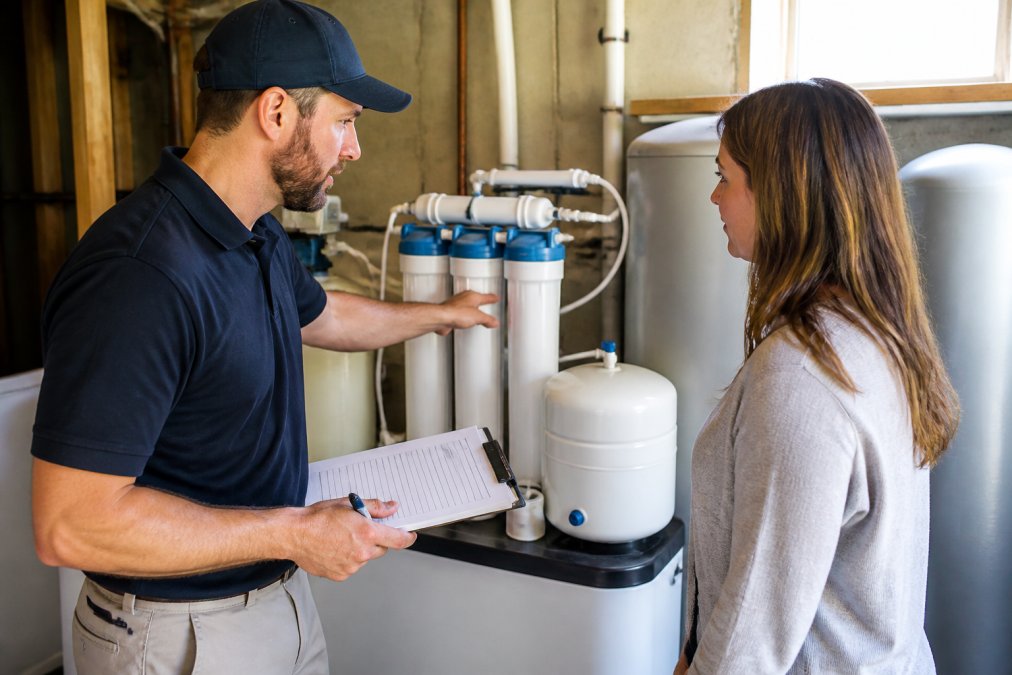
Water filtration system consulting services are independent assessments that identify what is actually in your water, then design a treatment plan around those findings rather than a product catalog. At Toxin Free with Rob / Healthy Water Solutions LLC, the process starts with certified lab testing and a WQA Certified Water Specialist reading the results, not a sales pitch.
The Education-First Difference: Independent Advice vs. Equipment Sales
Independence is the whole value proposition: a consultant who sells nothing has no reason to recommend reverse osmosis when a simple carbon block solves the problem. That is the education-first model, you pay for analysis and judgment, then buy equipment wherever you like, or nowhere at all.
What to Expect From Home Water Quality Testing Services
Home water quality testing services typically involve collecting a sample from your tap, shipping it to a certified laboratory, and receiving a report within one to two weeks. The sample must come from the right location, be handled correctly, and reach the lab within its holding window, or the results are void.
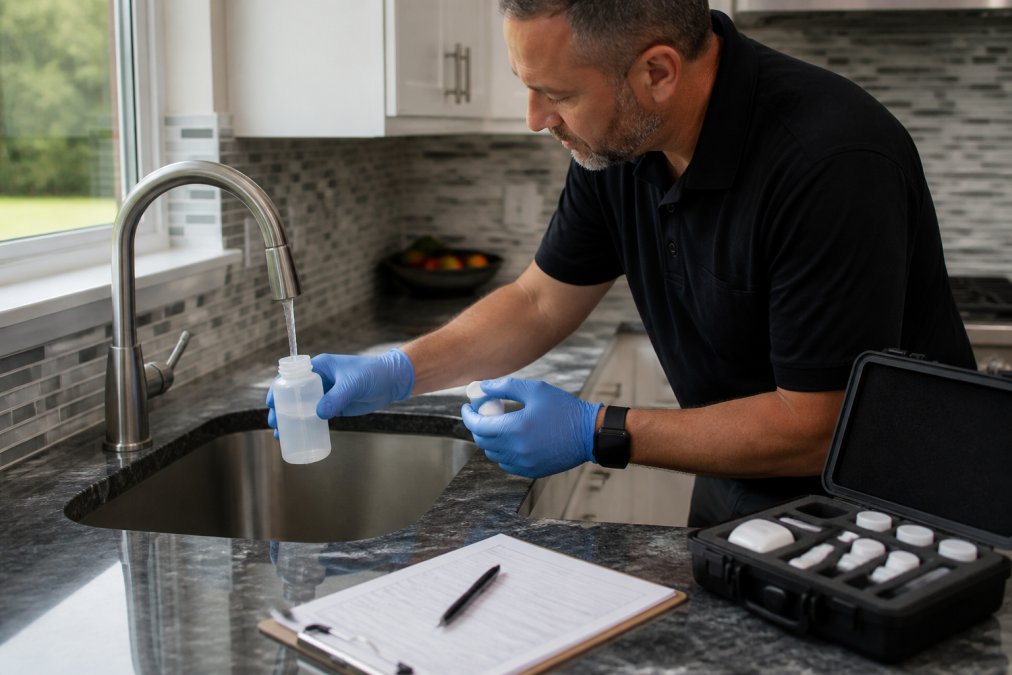
The steps follow a consistent pattern:
- Intake call to identify your water source and any symptoms you have noticed
- Sample collection using lab-supplied bottles and preservation instructions
- Laboratory analysis for the contaminant panel relevant to your source
- Report interpretation with a specialist who explains what each number means
- Recommendation covering treatment options, or a clear "no action needed"
Municipal Water vs. Well Water Testing: Two Different Playbooks
Municipal water and well water require different test panels, and treating them the same wastes money. Your utility's annual Consumer Confidence Report tells you what was detected at the plant, a starting point, not an answer, because it cannot account for your service line or home plumbing.
| Water Source | Baseline Testing | Retest Frequency | Key Concern |
|---|---|---|---|
| Municipal | Lead, disinfection byproducts, PFAS | Annually, plus after plumbing work | Service line and home piping |
| Private well | Bacteria, nitrates, arsenic, hardness | Annually, or after flooding | No regulatory oversight exists |
| Mixed or unknown | Full panel including both sets | Annually until a pattern emerges | Source cannot be assumed |
How to Interpret Water Lab Reports Without a Science Degree
A water lab report is a table of measured concentrations compared against a reference limit, and you only need three columns to read one: the result, the limit it is compared against, and whether the result sits above or below that line. Everything else is detail.
The Numbers That Actually Change Your Buying Decision
Three measurements drive most equipment choices: hardness, total dissolved solids, and the specific contaminant that exceeded a limit. Hardness tells you whether a softener earns its place, TDS gives a rough sense of mineral load, and the contaminant result tells you which filtration media will work.
Do I Need a Water Softener, or Is Filtration Enough?
You need a water softener only if your water is actually hard, and filtration if a contaminant is present regardless of hardness. These solve different problems, and conflating them is the most expensive mistake in home water treatment. Softeners remove calcium and magnesium through ion exchange; filters remove contaminants through sediment filtration, carbon adsorption, or reverse osmosis.
What Hardness Numbers Actually Mean for Your Equipment
Hardness is reported in grains per gallon or milligrams per liter as calcium carbonate, converting at roughly 17.1 mg/L per grain. Most practitioners treat anything above about 7 grains per gallon as the point where scale becomes a practical problem for water heaters, dishwashers, and coffee makers. Between 3 and 7 grains, the decision is mostly about appliance longevity and tolerance for spotting; below 3 grains, a softener rarely earns its cost.
Where Softening and Filtration Must Be Sequenced
If your report shows hardness above the practical threshold plus lead, PFAS, arsenic, or bacteria, you need both technologies in the correct order. Softening goes first when downstream media is scale-sensitive: reverse osmosis membranes foul quickly under hard water, so a softener or anti-scalant stage protects the membrane and extends its life. Carbon blocks are less sensitive but still perform better on softened water.
When Filtration Alone Is the Right Answer
If your water is soft but contains lead from a service line, PFAS from industrial or firefighting sources, or disinfection byproducts from municipal treatment, a softener does nothing. Filtration alone is correct, as it is for renters and anyone who cannot install a whole-house system. Point-of-use carbon or reverse osmosis at the kitchen tap addresses drinking water without touching the plumbing.
Ask your consultant to calculate softener capacity from your measured hardness and peak household demand, not from a rule of thumb. An undersized softener regenerates constantly and still lets hardness through at peak draw.
| Situation | Softener | Filtration | Typical Sequence |
|---|---|---|---|
| Hard water, no contaminants | Yes | Optional carbon for taste | Softener, then carbon at tap |
| Soft water, lead or PFAS present | No | Yes, point-of-use | Carbon or RO at kitchen tap |
| Hard water plus contaminants | Yes | Yes | Softener, then carbon, then RO |
| Renters or no plumbing access | No | Yes, countertop or under-sink | Point-of-use only |
DIY vs. Professional Water Filtration Consulting: A Cost-Benefit Analysis
Professional consulting pays for itself when it prevents one wrong purchase. A DIY approach costs less upfront and works fine when your water is straightforward and your report is clean, but falls apart when a result is ambiguous, multiple contaminants interact, or you cannot tell whether a system is sized correctly for your flow rate.
| Factor | DIY Approach | Professional Consulting |
|---|---|---|
| Upfront cost | Lower | Higher |
| Risk of wrong purchase | High without a lab report | Low, specification-driven |
| Report interpretation | Self-research required | Included |
| System sizing | Often guessed | Calculated from flow rate |
| Best for | Clean, simple municipal water | Well water, mixed contaminants, health concerns |
System Design, Installation, and Ongoing Optimization
System design starts with water chemistry and flow rate, not a product line. A specialist calculates peak household demand, matches treatment capacity to it, and sequences components so each stage protects the next: sediment filtration first for particulates, carbon for chemical removal, then reverse osmosis or specialty media for what remains.
The most useful habit in home water treatment is retesting on a schedule. Water chemistry changes, media exhausts, and a system that was correctly sized three years ago may not be today. Testing is how you catch that before you notice it in a glass.
Regulatory Compliance and Sustainability: What Homeowners Should Know
Regulatory compliance is the utility's obligation, not yours, and understanding that boundary prevents both complacency and panic. Public water systems must meet limits set under the Safe Drinking Water Act, enforced through the EPA's drinking water standards and regulations. Private well owners have no such backstop. If you draw from a well, you are the regulator.
A Compliance Checklist You Can Actually Run
Most guides tell you to "check your local regulations" and stop there. Here is a concrete sequence any homeowner or facility manager can run.
- Pull your utility's current Consumer Confidence Report. Every community water system must publish one annually and deliver it to customers (the EPA). Find the detected contaminants, the detected levels, and the maximum contaminant level or treatment technique each is compared against.
- Identify your service line material. Lead, galvanized steel, and older brass fixtures can leach into water after it leaves the plant. Your utility may have a service line inventory; many are now required to publish one.
- Check your state drinking water program. EPA delegates primary enforcement to state agencies, and some states set limits stricter than the federal ones, PFAS limits in particular vary widely by state.
- For wells, check your state's private well program. Many state health departments publish recommended test panels and retest intervals specific to local geology.
- For commercial or multi-family properties, confirm your local health department's requirements. Backflow prevention, cross-connection control, and annual testing obligations often sit with the local authority, not the state.
- Document everything. Test reports, maintenance records, and equipment specifications are what you produce if a tenant, buyer, or inspector asks.
Where Compliance Actually Breaks Down
Compliance runs through your plumbing. Lead service lines and older solder are the most common source of lead at the tap, and no plant-side treatment fixes a pipe inside your home, which is why point-of-use treatment exists. The same applies to schools, clinics, and rental properties, where fixture-level testing often reveals problems the utility report cannot show.
Do not skip testing because your utility's annual report looks clean. That report reflects water leaving the treatment plant. It cannot see your service line, your internal plumbing, or your well. The gap between the plant and your glass is exactly where consulting adds value.
The Sustainability Trade-Offs Nobody Puts in a Brochure
Sustainability deserves a straight answer, not a marketing one. Every treatment technology has an environmental cost, and the honest goal is to install the smallest system that solves your actual problem.
- Reverse osmosis produces concentrate, typically a meaningful fraction of the feed water is sent to drain rather than delivered to the tap. Systems with a permeate pump or a recirculating design reduce that ratio, but the trade-off is real. RO also consumes membrane and pre-filter cartridges on a replacement cycle.
- Ion exchange softeners discharge brine during regeneration. The volume depends on hardness, resin capacity, and regeneration frequency. High-efficiency demand-initiated regeneration cuts salt and water use compared with timer-based units.
- Carbon block and granular carbon filters are landfill waste on a replacement cycle, and the spent media cannot be regenerated at home. The upside is that they use no water and no electricity.
- Whole-house systems multiply every one of these impacts across all water use, not just drinking water. A point-of-use system treats a fraction of the volume and generates a fraction of the waste.
Compliance is a floor, not a ceiling. Meeting the legal limit does not mean your water is optimal for your household, and it does not mean your plumbing is clean. Test at the tap, size the smallest system that solves the problem, and retest on a schedule.
Frequently Asked Questions
How much does it cost to service a water filtration system?
Service costs depend on the system type and what needs replacing. Sediment and carbon filters are the most affordable to maintain, while reverse osmosis membranes cost more. Annual maintenance typically includes filter swaps, a water quality check, and a flow rate inspection. Ask your provider for a written maintenance schedule so you know exactly what you're paying for and when. Pricing varies by system complexity and your water chemistry, so request a quote based on your specific setup.
What do water consultants do for residential properties?
A water consultant tests your water at a certified lab, explains what the results mean for your household, and recommends a treatment plan that matches your actual contamination issues. They evaluate water hardness, total dissolved solids, pH balance, and specific contaminants like lead and PFAS. They also help with system sizing, filtration media selection, and ongoing system optimization. The goal is to avoid buying equipment you don't need and to make sure what you do buy actually solves your problem.
How do I know if I need a water softener or a filtration system?
A water softener addresses hardness minerals like calcium and magnesium, which cause scale buildup and make soap less effective. A filtration system targets contaminants such as lead, chlorine byproducts, PFAS, and sediment. Many homes need both. The only way to know is to test your water. If your lab report shows high hardness but low contaminant levels, a softener alone may work. If you have both hardness and contamination, you'll likely need a combination approach.
Are water filtration consulting services worth it if my water tastes fine?
Taste and odor only reveal a fraction of what's in your water. Lead, PFAS, and many other contaminants have no taste or smell. Water filtration consulting services use lab-certified results to show you what's actually present. If the results come back clean, you save money by not buying unnecessary equipment. If they show a problem, you catch it before it affects your family's health. Either outcome gives you data instead of assumptions.
How quickly can I get water test results and a filtration recommendation?
Certified lab testing typically takes several business days for standard contaminant panels, depending on which tests you need. Some tests, like bacteria screening, have shorter turnaround times. After your results arrive, a consultation to review the lab report and outline treatment options can usually happen within a few days. A water specialist can walk you through the findings and give you a clear recommendation so you're not left guessing.
Are water consultants certified, and how do I verify their credentials?
Look for certifications from recognized bodies like the Water Quality Association (WQA), which offers the Certified Water Specialist designation. This credential requires passing exams and staying current with industry standards. You can verify certification status through the WQA's directory. A certified specialist should also use accredited third-party labs for testing, which means your results are lab-certified and not generated by the same company selling you a filter.
Frequently Asked Questions
How much does it cost to service a water filtration system?
Service costs depend on the system type and what needs replacing. Sediment and carbon filters are the most affordable to maintain, while reverse osmosis membranes cost more. Annual maintenance typically includes filter swaps, a water quality check, and a flow rate inspection. Ask your provider for a written maintenance schedule so you know exactly what you're paying for and when. Pricing varies by system complexity and your water chemistry, so request a quote based on your specific setup.
What do water consultants do for residential properties?
A water consultant tests your water at a certified lab, explains what the results mean for your household, and recommends a treatment plan that matches your actual contamination issues. They evaluate water hardness, total dissolved solids, pH balance, and specific contaminants like lead and PFAS. They also help with system sizing, filtration media selection, and ongoing system optimization. The goal is to avoid buying equipment you don't need and to make sure what you do buy actually solves your problem.
How do I know if I need a water softener or a filtration system?
A water softener addresses hardness minerals like calcium and magnesium, which cause scale buildup and make soap less effective. A filtration system targets contaminants such as lead, chlorine byproducts, PFAS, and sediment. Many homes need both. The only way to know is to test your water. If your lab report shows high hardness but low contaminant levels, a softener alone may work. If you have both hardness and contamination, you'll likely need a combination approach.
Are water filtration consulting services worth it if my water tastes fine?
Taste and odor only reveal a fraction of what's in your water. Lead, PFAS, and many other contaminants have no taste or smell. Water filtration consulting services use lab-certified results to show you what's actually present. If the results come back clean, you save money by not buying unnecessary equipment. If they show a problem, you catch it before it affects your family's health. Either outcome gives you data instead of assumptions.
How quickly can I get water test results and a filtration recommendation?
Certified lab testing typically takes several business days for standard contaminant panels, depending on which tests you need. Some tests, like bacteria screening, have shorter turnaround times. After your results arrive, a consultation to review the lab report and outline treatment options can usually happen within a few days. A water specialist can walk you through the findings and give you a clear recommendation so you're not left guessing.
Are water consultants certified, and how do I verify their credentials?
Look for certifications from recognized bodies like the Water Quality Association (WQA), which offers the Certified Water Specialist designation. This credential requires passing exams and staying current with industry standards. You can verify certification status through the WQA's directory. A certified specialist should also use accredited third-party labs for testing, which means your results are lab-certified and not generated by the same company selling you a filter.