Table of Contents
- What Is Lead in Municipal Water and Why It Matters
- Health Effects of Lead in Drinking Water
- Physical Signs of Lead Contamination in Your Tap Water
- How to Test Municipal Water for Lead: Methods and Standards
- NSF Certified Water Filters for Lead Removal
- Steps to Reduce Lead Exposure in Your Home
- Financial Assistance and Resources for Pipe Replacement
- Frequently Asked Questions
Last Updated: September 30, 2026
What Is Lead in Municipal Water and Why It Matters
Lead in municipal water is a serious public health concern. Healthy Water Solutions LLC helps homeowners understand the signs of lead in municipal water and act before contamination becomes a health crisis. Lead enters drinking water through corrosion of lead service lines, plumbing fixtures, and lead solder in household plumbing, not from the water treatment plant, but from the pipes delivering water to your home.
Lead is invisible; you cannot see, taste, or smell it. Homes built before 1986 may have lead service lines; even newer homes can contain lead solder or brass fittings that leach lead into tap water. The EPA action level is 15 parts per billion, but no truly safe level exists, particularly for children and pregnant women (the EPA).
Understanding the signs of lead in municipal water means identifying plumbing materials and water quality indicators that signal contamination risk. This guide covers physical signs, testing methods, and practical steps to reduce exposure.
Health Effects of Lead in Drinking Water
Lead exposure causes measurable harm, especially in children: neurodevelopmental delays, reduced IQ, behavioral problems, and learning disabilities (the CDC). In adults, it is linked to hypertension, kidney decline, and cardiovascular problems.
Lead bioaccumulates in bones and tissues over time; repeated low-level exposure creates cumulative burden. Pregnant women face particular risk because lead crosses the placental barrier and affects fetal development.
Lead is a neurotoxin that interferes with calcium metabolism and damages the central nervous system. Children absorb lead more efficiently than adults, making them far more vulnerable. No safe threshold exists.
Physical Signs of Lead Contamination in Your Tap Water
Identifying physical signs of lead in municipal water requires attention to your plumbing and water appearance. Visual inspection flags risk factors and helps prioritize which taps to test first, though it does not replace lab testing.
How to identify lead service lines:
Your water service line connects your home to the municipal water main. Locate your water meter (typically in the basement, crawl space, or outside near the foundation) and trace the pipe leading into your home. Lead service lines have these characteristics:
- Color and finish: Dull gray metal. Lead maintains a matte gray appearance and does not oxidize like copper or steel.
- Softness test: Scratch an inconspicuous section with a screwdriver or penny. Lead shows a bright silver mark underneath the gray patina; copper shows reddish-orange; galvanized steel resists scratching.
- Magnetic test: Lead is non-magnetic. If a magnet sticks, it is steel or galvanized iron.
- Flexibility: Lead pipes bend slightly by hand; copper and steel are rigid.
If you cannot access the service line, ask your water utility for a service line material record.
How to identify lead solder and brass fittings:
Lead solder was used to join copper pipes in homes built before 1986. Examine pipe joints in your basement and under sinks.
- Lead solder appearance: Gray-silver joints between copper pipes, often duller than the copper itself.
- Brass fittings: Brass faucets, shut-off valves, and connectors can leach lead, especially if water is acidic. Brass appears golden, distinct from copper (reddish) or steel (silver).
- Age indicator: If your home was built or renovated before 1986, assume lead solder is present unless you have documentation of replacement.
Water quality indicators that suggest corrosion:
Corrosion accelerates lead leaching. Look for these signs:
- Blue-green staining on copper pipes or fixtures: Indicates acidic water chemistry that leaches lead from solder.
- Rusty or reddish stains on galvanized pipes: Signals water chemistry problems affecting lead leaching.
- Discolored water when first running a tap: Brown, yellow, or cloudy water suggests corrosion byproducts. Run the tap 30 seconds; if it clears, discoloration came from pipes, not the municipal supply.
- Sediment in glasses of water: Suggests corrosion particles or scale accumulation.
- Metallic or bitter taste: Can indicate heavy metal contamination.
Inspection checklist for your home:
- Locate and inspect your water service line (material, color, softness).
- Examine visible copper pipe joints for gray-silver solder.
- Check brass faucets, shut-off valves, and connectors for age.
- Run cold water from your kitchen tap for 30 seconds and observe color.
- Look for blue-green or rusty stains on pipes and fixtures.
- Note your home's age and any plumbing renovation dates.
This visual inspection identifies risk factors but cannot measure lead concentration. Professional lab testing is the only way to know definitively.
How to Test Municipal Water for Lead: Methods and Standards
Professional lab testing is the only way to know definitively whether lead contaminates your water.
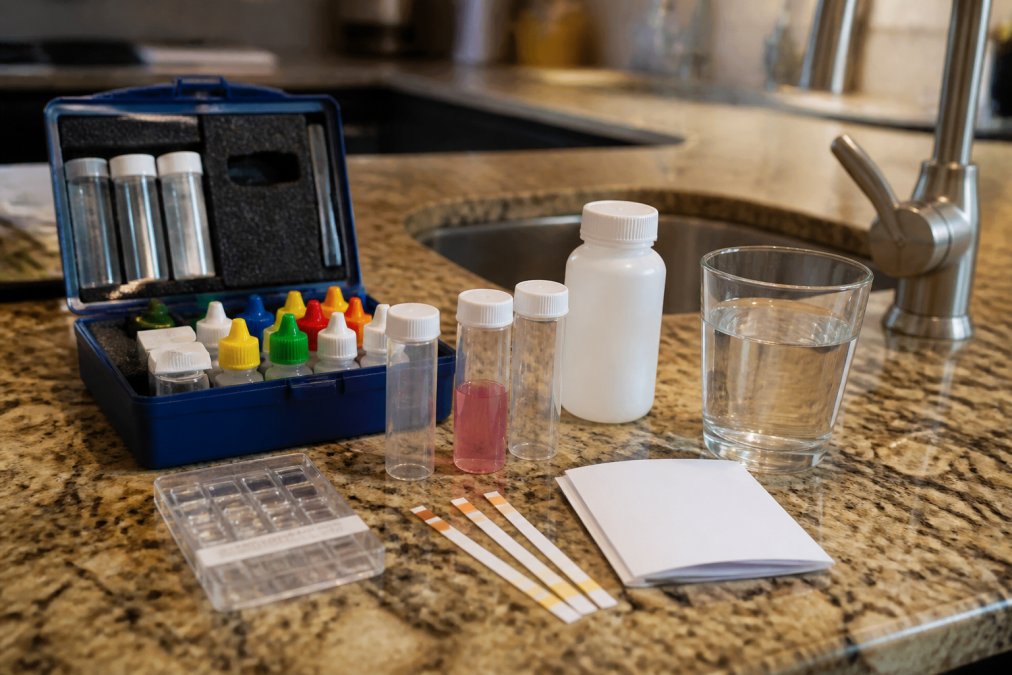
Professional lab testing identifies lead concentration in parts per billion and screens for other contaminants. A WQA Certified Water Specialist can guide you through proper sample collection protocols (first-draw water and flushed water after 30 seconds) to ensure precise measurements and tailored recommendations. The EPA action level is 15 parts per billion, but experts recommend testing if you live in a pre-1986 home or see signs of corrosion.
DIY Visual Inspection vs. Professional Testing
Professional testing removes guesswork. A certified lab analyzes your water sample and provides quantitative data on lead levels. Many municipalities offer free or low-cost testing; others require hiring a private lab. Healthy Water Solutions LLC provides certified lab testing for both municipal and well water, giving you data-driven insight and personalized filtration recommendations.
NSF Certified Water Filters for Lead Removal
Not all water filters remove lead effectively. Look for NSF/ANSI certification, which indicates third-party testing and verification. You must also understand filter lifespan, maintenance, and real-world performance to make a purchasing decision that protects your family and fits your budget.
NSF certification standards for lead removal:
NSF/ANSI Standard 53 certifies filters for health effects, including lead removal. A filter bearing this certification reduces lead by at least 99.9% under laboratory conditions. Filters without this certification may reduce lead somewhat but have not undergone independent verification and may fail under real-world conditions.
Filter types and their mechanisms:
- Activated carbon block filters: Trap lead through adsorption. Effective when NSF/ANSI 53 certified. Common in pitcher, faucet-mounted, and under-sink cartridges. Affordable but require frequent replacement (every 2-3 months for pitcher filters, every 6-12 months for under-sink models).
- Reverse osmosis systems: Remove lead and dissolved minerals. Highly effective (99.9%+ removal) but produce 3-4 gallons of wastewater per 1 gallon treated. Cartridges last 12-24 months. Best for moderate to high lead levels.
- Distillation systems: Boil water and condense steam. Highly effective but energy-intensive and slow (1-2 gallons per hour). Not practical for most households.
- Ion exchange (water softeners): Not certified for lead removal under NSF/ANSI 53. Do not rely on alone.
Filter replacement schedules and maintenance:
A saturated filter no longer removes lead. Many homeowners use filters far beyond their rated lifespan.
- Pitcher filters (e.g., Brita, PUR): Replace every 2-3 months or after 40 gallons.
- Faucet-mounted filters: Replace every 3-6 months.
- Under-sink cartridges: Replace every 6-12 months.
- Whole-home sediment filters: Replace every 6-12 months.
- Reverse osmosis cartridges: Pre-filters last 6-12 months; RO membrane lasts 12-24 months.
Mark your calendar for cartridge replacement.
Cost-effectiveness and point-of-use vs. whole-home approaches:
- Point-of-use filters at kitchen and bathroom taps: NSF/ANSI 53 certified filters treat drinking and cooking water. Protects consumed water but not shower or laundry water.
- Whole-home sediment filtration: Removes particles that accelerate corrosion in pipes, reducing lead leaching. Improves overall water quality but does not remove dissolved lead.
- Whole-home lead removal: Treats all water but costs $500-$2,000 installed and produces wastewater. Reserve for very high lead levels.
Avoiding ineffective filters:
Testing after filter installation:
Steps to Reduce Lead Exposure in Your Home
Immediate actions reduce lead exposure while you arrange testing and filtration.
Avoid boiling. Boiling concentrates lead rather than removing it.
Financial Assistance and Resources for Pipe Replacement
Replacing a lead service line is expensive, but federal and state programs provide financial assistance in many areas.
Testing Method | Best For | Cost Range | Timeline |
|---|---|---|---|
DIY visual inspection | Initial plumbing assessment | Minimal | Immediate |
Professional lab testing | Definitive lead measurement | Varies by provider | 5-10 business days |
Point-of-use filters | Drinking and cooking water | Moderate | Installation within minutes/hours |
Whole-home filtration | Comprehensive protection | Higher | Professional installation required |
Frequently Asked Questions
What are the physical signs of lead contamination in tap water?
Lead itself is invisible, odorless, and tasteless, so you cannot detect it by sight or smell. However, signs of lead contamination may include blue-green or brown staining on fixtures and pipes from corrosion, discolored water, or a metallic taste. Lead service lines and corroded plumbing fixtures are common sources. The only reliable way to confirm lead presence is through water testing—visual inspection alone is insufficient.
How do I test my municipal water for lead?
Contact your local water utility for a free or low-cost water quality report, which includes lead testing results. For more detailed testing, use an EPA-certified laboratory or consult a WQA Certified Water Specialist for guidance on collecting samples from your tap. Testing typically takes 7-14 days. Professional testing identifies lead levels at your specific address and pinpoints whether contamination originates from the public water system or household plumbing.
What health effects does lead in drinking water cause?
Lead exposure causes serious health effects in both children and adults. In children, even low blood lead levels can cause neurodevelopmental delay, learning difficulties, and behavioral problems. Adults may experience hypertension, kidney function decline, and cardiovascular health issues. Lead bioaccumulates in bone tissue over time, creating long-term health risks. Pregnant women and young children face the highest risk, making early detection and removal critical.
Do NSF certified water filters actually remove lead?
Yes, NSF/ANSI certified filters specifically rated for lead removal are highly effective. Look for filters certified to NSF/ANSI Standard 53 or 58. Point-of-use filters, reverse osmosis systems, and distillation are proven methods. However, certification standards vary—verify the specific NSF rating before purchase. A WQA Certified Water Specialist can recommend the most cost-effective option for your home's contamination level.
Frequently Asked Questions
What are the physical signs of lead contamination in tap water?
Lead itself is invisible, odorless, and tasteless, so you cannot detect it by sight or smell. However, signs of lead contamination may include blue-green or brown staining on fixtures and pipes from corrosion, discolored water, or a metallic taste. Lead service lines and corroded plumbing fixtures are common sources. The only reliable way to confirm lead presence is through water testing—visual inspection alone is insufficient.
How do I test my municipal water for lead?
Contact your local water utility for a free or low-cost water quality report, which includes lead testing results. For more detailed testing, use an EPA-certified laboratory or consult a WQA Certified Water Specialist for guidance on collecting samples from your tap. Testing typically takes 7-14 days. Professional testing identifies lead levels at your specific address and pinpoints whether contamination originates from the public water system or household plumbing.
What health effects does lead in drinking water cause?
Lead exposure causes serious health effects in both children and adults. In children, even low blood lead levels can cause neurodevelopmental delay, learning difficulties, and behavioral problems. Adults may experience hypertension, kidney function decline, and cardiovascular health issues. Lead bioaccumulates in bone tissue over time, creating long-term health risks. Pregnant women and young children face the highest risk, making early detection and removal critical.
Do NSF certified water filters actually remove lead?
Yes, NSF/ANSI certified filters specifically rated for lead removal are highly effective. Look for filters certified to NSF/ANSI Standard 53 or 58. Point-of-use filters, reverse osmosis systems, and distillation are proven methods. However, certification standards vary—verify the specific NSF rating before purchase. A WQA Certified Water Specialist can recommend the most cost-effective option for your home's contamination level.