Table of Contents
- What a Kangen Water Machine Actually Does
- Kangen Water Machine Reviews: What the Models Offer
- Kangen Water Machine Price and Total Cost of Ownership
- Kangen Water vs. Filtered Water: What's the Real Difference?
- Kangen Water Machine Maintenance and Filter Replacement
- How to Set Up and Operate Your Machine
- Health Claims, Evidence, and Buyer Objections
- Conclusion
- Frequently Asked Questions
Last Updated: October 21, 2026
What a Kangen Water Machine Actually Does
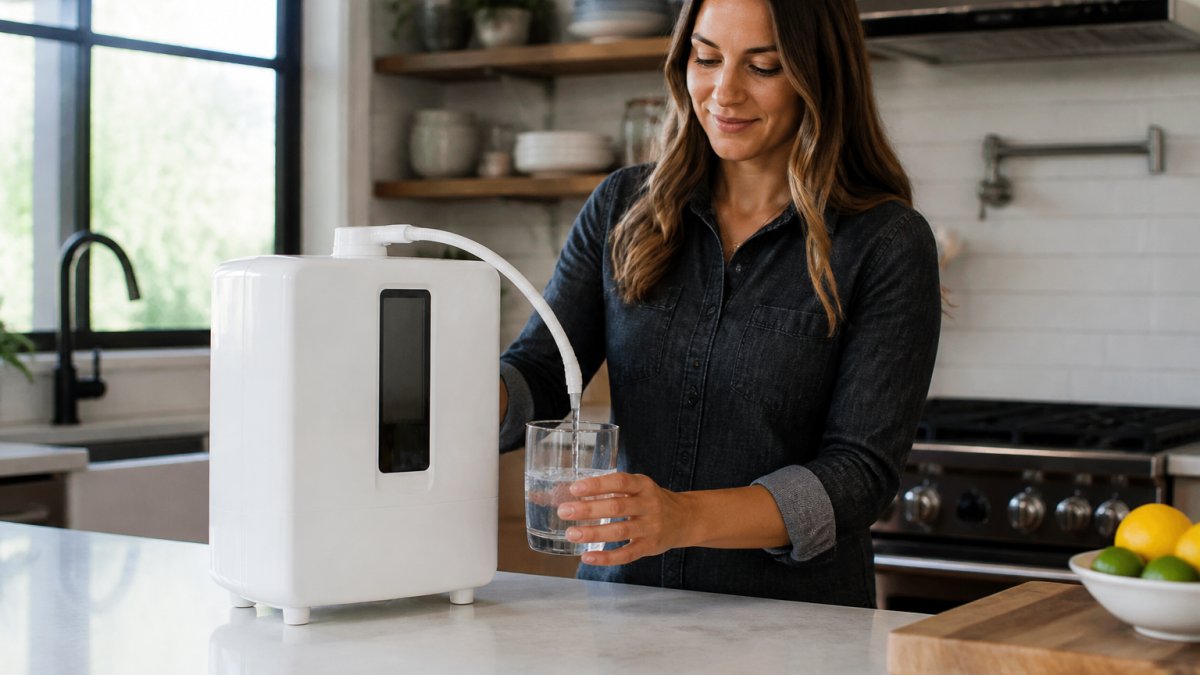
A Kangen Water machine is a countertop water ionizer that filters your tap water and then runs it through electrolysis to produce several streams of water at different pH levels.
That distinction matters more than most sales pages admit. The filter does the safety work. The electrolysis does the pH and oxidation-reduction potential work.
Filtration and electrolysis: the two-stage process
Water first passes through a filter cartridge that reduces sediment, chlorine, and other unwanted content. The filtered water then enters an electrolysis chamber containing platinum-dipped titanium plates. An electric current splits the water into two streams: an alkaline stream and an acidic stream. The machine lets you select which stream comes out of the spout.
The five water types and their pH ranges
Enagic machines typically offer several outputs, commonly described as strong alkaline, alkaline drinking water, neutral, slightly acidic beauty water, and strong acidic cleaning water. Exact pH values vary by model and source water, so check the manufacturer's documentation for your specific machine rather than assuming a fixed number.
Kangen Water Machine Reviews: What the Models Offer
Most Kangen Water machine reviews online either repeat the manufacturer's marketing or list prices without context. A more useful review compares the models on the specifications that actually affect daily ownership: plate count, plate material, filtration stages, physical footprint, and the intended household size. Enagic documents these details on its own product pages, and that is the honest place to verify them because third-party summaries go stale.
Leveluk K8: the eight-plate flagship
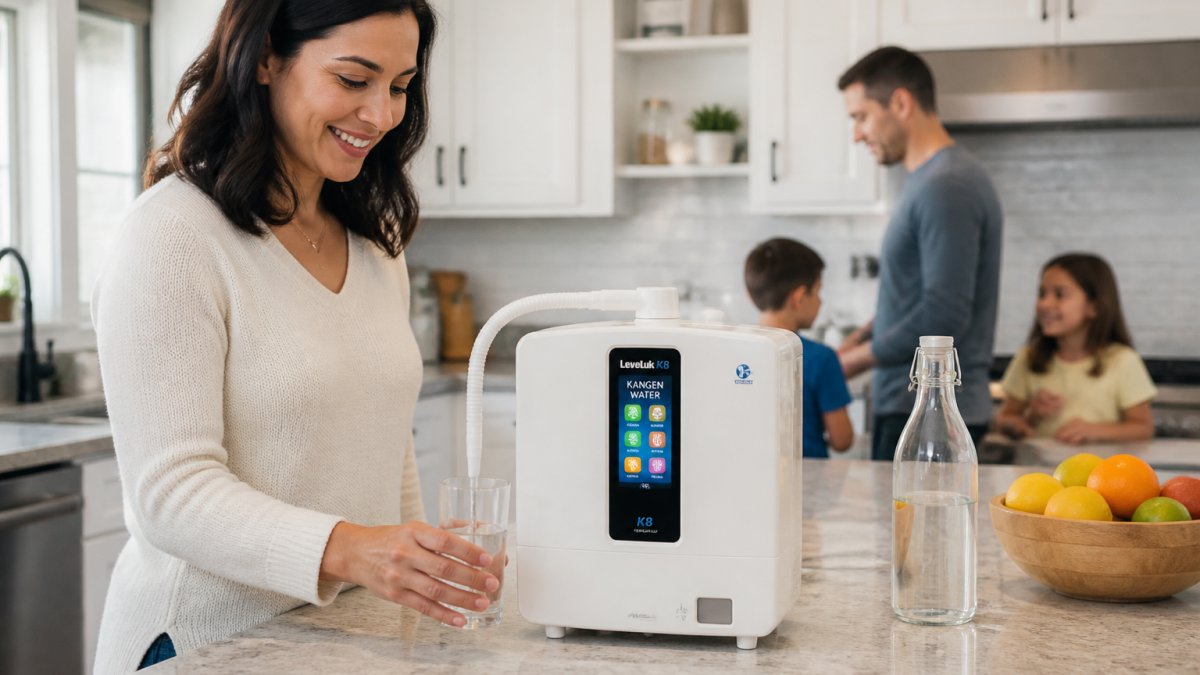
The Leveluk K8 uses eight platinum-dipped titanium plates, which Enagic describes as its most powerful antioxidant machine. More plates generally mean more surface area for electrolysis, which matters for households running the machine several times a day. The K8 is a model often considered by families with high daily volume, as the extra plate capacity can support consistent output across multiple users. It also includes a built-in filter cartridge and the standard Enagic diverter-valve setup, so installation is the same as the rest of the lineup.
SD501, SD501DX, and SUPER501 compared
The SD501 (TYH-401NF), SD501DX, and SUPER501 (TYH-501) all appear on Enagic's official product comparison page. The manufacturer's comparison is the honest place to check plate counts, dimensions, and features side by side, because model details change and third-party summaries go stale. As a general guide, the SD501 is the long-running core model with seven plates, the SD501DX is a variant in the same family, and the SUPER501 is a larger unit intended for higher-volume use. Confirm the exact specifications on Enagic's page before you buy, and ask your distributor for the current filter part number for whichever model you choose.
What the reviews usually miss
Three things matter more than plate count alone. First, filtration capacity: the filter cartridge determines how often you replace it and what contaminants it reduces, so check the cartridge part number and the manufacturer's replacement schedule. Second, source water: hard water or high sediment shortens cartridge life and can affect electrolysis performance, so test your water before you choose a model. Third, physical footprint: measure your counter space and confirm clearance for the diverter valve and hoses. A machine that does not fit your kitchen will not get used.
A note on independent comparisons
Most ranking reviews are seller pages or user discussions, and few compare models on total cost of ownership or measurable performance. That is the gap we try to fill: match the model to your household size and water quality first, then compare lifetime filter costs, and only then look at the sticker price. Toxin Free with Rob provides personalized strategy calls for filtration and hydration solutions, which can include discussing models like the K8 versus the SD501 family based on your water test results.
Kangen Water Machine Price and Total Cost of Ownership
Pricing for Kangen Water machines is not published as a simple retail number, and we will not invent one. Enagic sells through independent distributors, so the Kangen Water machine price you are quoted depends on the model, the current distributor terms, and any promotions in effect.
Total cost of ownership is where buyers get surprised, and it is the angle most reviews skip.
The four cost drivers to model
- Purchase price. This varies by model and distributor terms. Get a written quote for the specific model you want, including any accessories such as the diverter valve or pre-filter.
- Replacement filters. Filter cartridges are the largest recurring cost. The replacement interval depends on your water quality and daily volume, so ask for the manufacturer's recommended schedule and the current cartridge part number. Hard water or high sediment shortens cartridge life.
- Electricity. A countertop ionizer draws a modest amount of power during operation. The exact draw depends on the model and how often you run it, so check the manufacturer's electrical specifications rather than guessing.
- Service and repair. Plates, valves, and pumps can fail over a long ownership period. Ask your distributor what service options exist and whether replacement parts are available for the model you are considering.
How to compare models on lifetime cost
The most common buying mistake we see is comparing sticker prices across models without comparing filter costs. A cheaper machine with frequent cartridge changes can cost more over five years than a higher-capacity unit with a longer filter interval. Build a simple worksheet: multiply the number of filter changes per year by the cartridge cost, add an estimate for electricity, and add a service reserve. Then compare that five-year total across the K8, the SD501 family, and the SUPER501. The model with the lowest sticker price is not always the lowest lifetime cost.
What we will not do
We will not publish a price that may be out of date, and we will not quote a competitor's price we cannot verify. If you want a current number for the Leveluk K8 or any other Enagic model, request a quote through our distributor link and we will send the current terms along with the filter schedule for your water quality. That is the only honest way to compare lifetime cost.
Kangen Water vs. Filtered Water: What's the Real Difference?
Kangen Water vs. filtered water comes down to what each process is designed to do. A standard carbon filter reduces chlorine, sediment, and some organic compounds. It does not change pH or add dissolved hydrogen. An ionizer filters first, then electrolyzes, producing alkaline and acidic streams with a measurable oxidation-reduction potential.
Explore Kangen Water & Pricing →
Whether the electrolysis output delivers health benefits is a separate question from whether the water is clean. Those are two different claims, and mixing them is how buyers end up disappointed.
Kangen Water Machine Maintenance and Filter Replacement
Kangen Water machine maintenance is simpler than most owners expect, but it is not optional. Replace the filter cartridge on the manufacturer's schedule, which depends on your water quality and daily volume. Hard water or high sediment loads shorten cartridge life, so test your source water first.
Beyond filters, clean the exterior, keep the spout clear, and run the machine's built-in cleaning cycle as directed. If you have hard water, a pre-filter is worth considering. Toxin Free with Rob offers certified lab water testing for municipal and well water, which can inform equipment recommendations.
How to Set Up and Operate Your Machine
Setup takes about 30 minutes for most countertop installs. Here are the steps we walk customers through:
- Unbox and place the machine on a stable counter near a grounded outlet.
- Connect the diverter valve to your faucet and attach the inlet hose.
- Install the filter cartridge and flush it per the manual before first use.
- Turn on the water supply and check every connection for leaks.
- Power on the machine and let it run through its initial cycle.
- Select your water type, dispense a glass, and confirm the flow looks normal.
For daily operation, press the button for the water type you want, fill your glass, and switch back to neutral when finished. The U.S. Environmental Protection Agency's guidance on drinking water contaminants is a useful reference for understanding what your filter is actually up against.
Health Claims, Evidence, and Buyer Objections
Health claims around Kangen Water deserve careful reading. Research on electrolyzed reduced water and molecular hydrogen is ongoing, and much of it is preliminary. Some studies suggest antioxidant and hydration effects; none of that establishes that Kangen Water cures, treats, or prevents disease. Anyone who tells you otherwise is overselling.
The honest objection is cost. A premium ionizer is a significant purchase, and it only makes sense if you will use it daily and keep up with filters.
Conclusion
The hardest part of buying a Kangen Water machine is separating documented specifications from marketing noise. Start with your water test, compare plate counts on the manufacturer's own comparison page, and budget for filters over the life of the machine.
At Toxin Free with Rob, we help families do exactly that. Our WQA Certified Water Specialist guidance, certified lab water testing for municipal and well water, and personalized strategy calls give you data before you spend. We are also a global supplier of medical-grade Kangen Water ionizers, including the Leveluk K8. Start your assessment and find out what is actually in your water.
Frequently Asked Questions
Does a Kangen Water machine really work?
It does what a water ionizer is designed to do: filter tap water and use electrolysis across platinum-dipped titanium plates to produce alkaline and acidic water streams. Whether that translates into health benefits is a separate question. Published research on hydrogen-rich and electrolyzed reduced water is promising but still preliminary, and no machine is approved to cure, treat, or prevent disease. Judge it on documented filtration, plate count, and build quality, and treat health outcomes as unproven rather than guaranteed.
How much does a Kangen Water machine price run, and what ongoing costs should I expect?
Enagic does not publish prices on its comparison pages, so the Kangen Water machine price depends on the model and the authorized distributor you buy from. Ask for a full quote that includes the machine, the first filter cartridge, and shipping. Ongoing costs are the replacement filter cartridges on the manufacturer's recommended schedule and any service visits. Request the total first-year figure in writing so you can compare it against a standard under-sink filtration system over the same period.
What is the difference between the Leveluk K8 and SD501?
The clearest documented difference is the plate count. The Kangen 8 uses eight platinum-dipped titanium plates, while the SD501 is a separate Leveluk model listed on Enagic's official comparison page. More plates generally mean more electrolysis surface area, which affects output capacity, but Enagic's comparison page is the source to check for model-specific specifications rather than assuming the flagship is right for every household. Confirm dimensions, warranty terms, and filter schedule before deciding.
Does a Kangen Water machine remove contaminants from tap water?
The machine's filter cartridge is designed to reduce certain contaminants, but the only way to know what your water contains is to test it first. Lead, PFAS, and microplastics are not all handled the same way by every filter, and well water can carry bacteria and nitrates that municipal treatment addresses differently. A certified lab test before you buy tells you which contaminants matter in your home, so you can confirm the machine's filtration meets that specific need.