Table of Contents
- Why Independent Water Quality Testing Matters for Your Home
- EPA Certified Water Testing Labs: What Certification Actually Means
- DIY Kits vs. Independent Water Quality Testing Services
- How to Interpret Water Quality Test Results Without a Chemistry Degree
- The Cost of Professional Water Analysis: Tiers and Trade-Offs
- What to Do When Your Results Show Contaminants
- Testing Before You Buy or Sell: Legal and Real Estate Considerations
- Conclusion
- Frequently Asked Questions
Last Updated: September 27, 2026
Why Independent Water Quality Testing Matters for Your Home
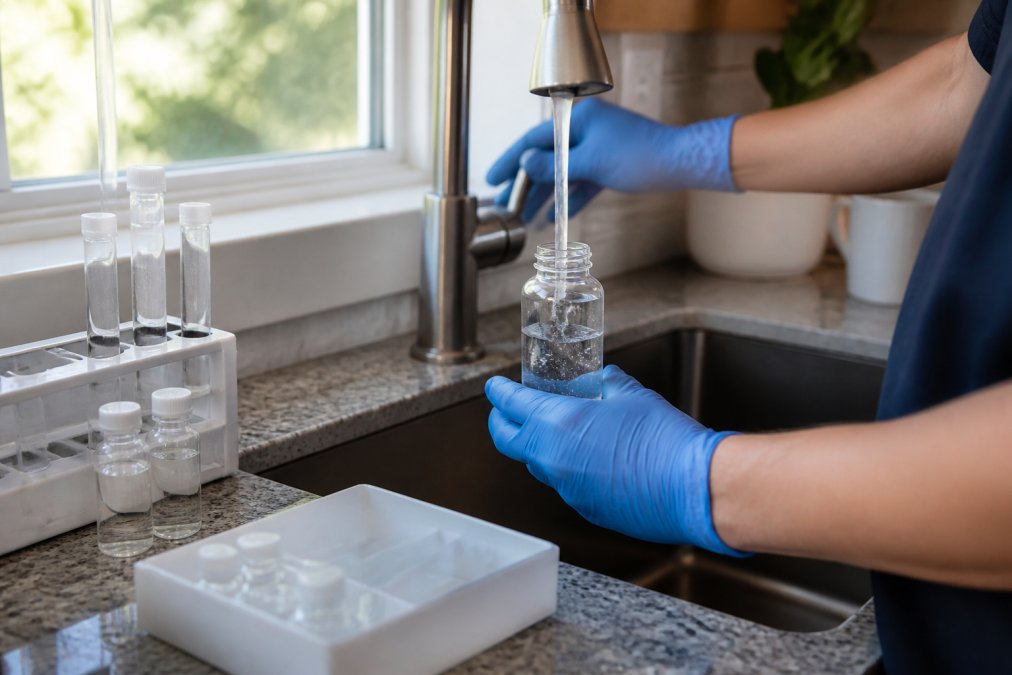
Independent water quality testing services give you a verified picture of what is actually coming out of your tap, separate from what a utility or a filter salesperson tells you. At Toxin Free with Rob, we work with families who want that picture in plain numbers before they spend money on treatment equipment.
EPA Certified Water Testing Labs: What Certification Actually Means
The gold standard is accreditation through a recognized state or national program tied to EPA's laboratory certification information. Independent labs also run their own quality control, including blank samples and duplicate analyses, to catch contamination introduced during handling.
DIY Kits vs. Independent Water Quality Testing Services
DIY test kits and independent water quality testing services answer different questions. A strip or drop kit gives a fast, cheap reading on a handful of parameters, usually pH, hardness, sometimes chlorine or nitrates. A certified lab panel gives quantified results across a broader contaminant list, with detection limits low enough to matter.
What a Certified Lab Panel Covers
A standard certified panel typically includes total coliform bacteria, nitrate and nitrite, lead, copper, arsenic, and hardness, with pH and total dissolved solids. Expanded panels add volatile organic compounds, additional heavy metals, and often PFAS and PFOA. The right panel depends on your water source and household, not on buying the largest package.
How to Interpret Water Quality Test Results Without a Chemistry Degree
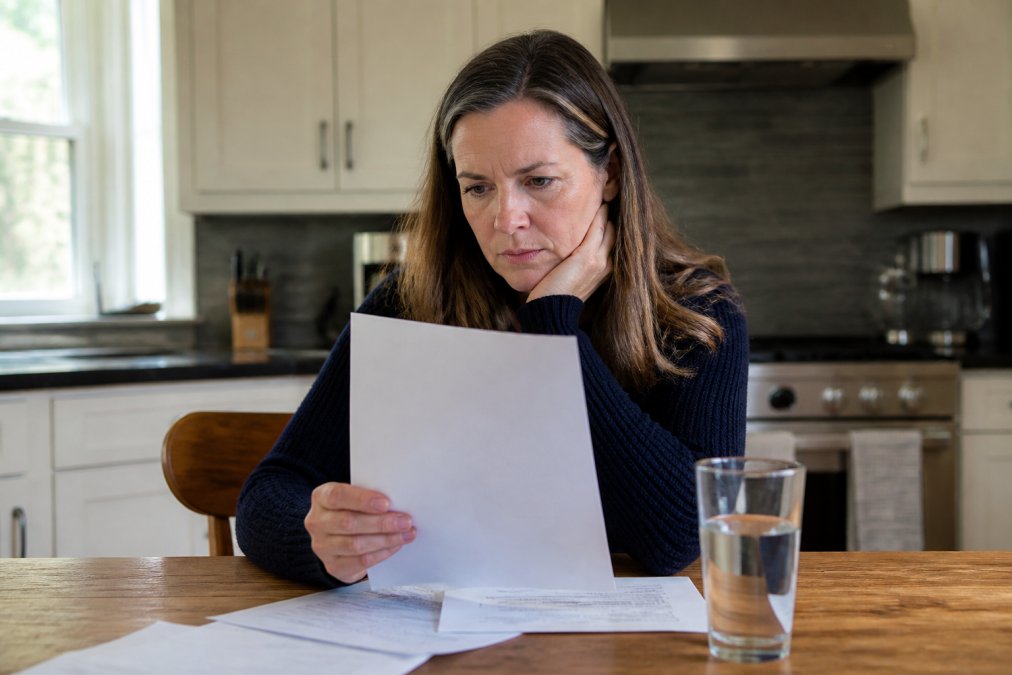
Interpreting water quality test results comes down to matching each number against a health-based guideline: is this result above or below the line? Every regulated contaminant has a maximum contaminant level or treatment technique standard, and your report lists your result next to that benchmark.
| Result Category | What It Means | Typical Next Step |
|---|---|---|
| Below guideline | No action needed on that parameter | Retest on your normal schedule |
| Above a secondary standard | Aesthetic issue, staining or taste | Consider targeted treatment |
| Above a health-based limit | Health concern, especially for children | Stop drinking, treat, retest |
| Not detected | Below the lab's detection limit | Note the limit and move on |
The Cost of Professional Water Analysis: Tiers and Trade-Offs
The cost of professional water analysis scales with two variables: how many contaminants the panel covers, and how low the lab's detection limits go. A lab that measures lead down to 1 part per billion costs more to run than one that stops at 15 ppb, because instrument time and quality control differ, which is why two panels with the same contaminant list can differ substantially in price.
Cost Per Contaminant Beats Sticker Price
The useful comparison is cost per contaminant, not total price. A broad panel usually costs less per analyte than several narrow tests run separately, because you pay for one sample kit, one shipping label, and one chain-of-custody record. If you have a single known concern, say, a neighbor's PFAS result, a targeted panel beats a generic comprehensive one.
Which Contaminants Are Worth Paying Extra For
The right add-ons depend on your water source, plumbing, and region, not on buying the largest package.
Basic, Expanded, and Comprehensive Panels Compared
| Panel Tier | Best For | Typical Contaminants | Trade-Off |
|---|---|---|---|
| Basic | New well owners, quick check, pre-listing screen | Bacteria, nitrate, lead, copper, hardness, pH | Misses PFAS, VOCs, and low-level metals |
| Expanded | Families with young children, older homes on municipal water | Above plus VOCs, wider metals suite, lower detection limits | Higher cost, longer turnaround |
| Comprehensive | Known local contamination, bedrock wells, properties near industrial or agricultural sources | Above plus PFAS, additional emerging contaminants, low-level detection | Highest cost, most data you may never act on |
How to Keep Costs Down Without Cutting Corners
Three practical moves. Sample once, test broadly, kit, shipping, and chain-of-custody costs are fixed, so adding analytes to an existing sample is cheaper than a second submission. Use the same lab for retests so you compare like with like. And if you are on municipal water with lead as your only concern, a first-draw lead and copper test is one of the cheapest high-value tests available and needs no full panel.
What to Do When Your Results Show Contaminants
When your results show a contaminant above a health-based limit, the sequence is: stop drinking the water, identify the source, treat the specific problem, then retest to confirm the fix worked. Do not skip the retest. Treatment systems fail, get installed incorrectly, or target the wrong contaminant, and the only way to know is to measure again.
Lead
Lead almost always enters after the treatment plant, through the service line, internal plumbing, solder, or fixtures, so the fix belongs at the point of use, not whole-house. A point-of-use filter certified to remove lead at the kitchen tap is the fastest, cheapest intervention; look for certification against the relevant NSF/ANSI standard for lead reduction, and run the tap before drinking if water has been sitting.
Nitrate and Nitrite
Nitrate in a private well usually points to a source: agricultural runoff, a failing septic system, or a shallow well casing letting surface water in. Treatment options include point-of-use reverse osmosis and ion exchange, but source control matters more, if the well itself is contaminated, treating one tap does not protect the rest of the house.
Bacteria (Total Coliform and E. coli)
A positive coliform result calls for shock chlorination of the well and distribution system, then retesting. E. coli indicates fecal contamination and warrants immediate action: stop drinking, shock chlorinate, and investigate the wellhead, casing, and septic system. If positives recur, the well may need professional inspection or continuous disinfection.
Arsenic
Arsenic is naturally occurring in some bedrock and does not come from plumbing. Treatment is typically point-of-use reverse osmosis or an adsorptive media filter certified for arsenic. Because arsenic has no taste or smell, retesting after installation is the only confirmation the system works. Whole-house treatment is usually unnecessary unless multiple taps are used for drinking and cooking.
PFAS and PFOA
PFAS is the hardest class to remove and the easiest to get wrong. Boiling concentrates it, and standard carbon filters vary widely. The methods with the strongest evidence are granular activated carbon designed and certified for PFAS reduction, and reverse osmosis. Because PFAS results are reported at very low concentrations, retest with the same lab and method to confirm the system is reducing levels.
Hardness, Iron, and Manganese
These are usually secondary standards, aesthetic issues, not health emergencies. Hardness causes scale; iron causes staining and taste; manganese causes discoloration and, at higher levels, is a health concern for infants. A water softener addresses hardness, and specific media filters address iron and manganese. Treat these after ruling out health-based contaminants, not before.
How to Choose a Filtration System Based on Your Report
Match the system to the contaminant, not the marketing. Three rules:
- Point-of-use vs. whole-house. Health contaminants that enter through plumbing (lead) or that you only drink (arsenic, nitrate, PFAS) are usually handled at the point of use. Aesthetic issues affecting every tap (hardness, iron) are handled whole-house.
- Certification matters. Look for a system certified against the relevant NSF/ANSI standard for the specific contaminant. A generic 'removes 99% of contaminants' claim is not a certification.
- Retest after installation. Use the same lab and method. A before-and-after comparison from two different labs is not a comparison.
Testing Before You Buy or Sell: Legal and Real Estate Considerations
Legal and real estate implications of water testing vary by state and by whether the property uses a private well or municipal supply. Some states require well water testing at property transfer; others leave it to the buyer's discretion. Lenders and insurers may have their own requirements.
Conclusion
The hard part of water testing is not collecting the sample. It is knowing which panel to order and what to do with the numbers once they arrive. Most homeowners either over-test and pay for data they never use, or under-test and miss the contaminant that actually affects their family.
Frequently Asked Questions
How much does it cost to test water quality through an independent lab?
The cost of professional water analysis depends on the panel you choose. Pricing varies by lab and turnaround time. Contact Healthy Water Solutions LLC for a quote tailored to your home and concerns.
What is the difference between a free water test and a certified lab test?
Free water tests are usually performed by filtration salespeople using handheld meters or strip tests. They screen for a narrow set of parameters and are not analyzed by an accredited laboratory. A certified lab test uses EPA-approved methods and chain of custody protocols, so results stand up to regulatory and real estate scrutiny. Independent water quality testing services give you data you can act on without a sales pitch attached.
How do I find an EPA certified water testing lab near me?
Start with your state's drinking water program, which lists certified laboratories. Look for labs accredited for the specific contaminants you want tested, such as lead and copper rule parameters, PFAS and PFOA, or total coliform bacteria. Ask whether the lab provides sample collection kits with preservation instructions. A WQA Certified Water Specialist can also point you to the right lab and panel for your water source.
How often should I use independent water quality testing services?
Test annually if you rely on a private well, since wells are not covered by the Safe Drinking Water Act. Municipal water users should test every two to three years, or sooner if you notice changes in taste, odor, or color. Test immediately after moving into a new home, after plumbing work, or if you are pregnant or have young children. Your municipal water report covers the treatment plant, not the pipes inside your home.
At Toxin Free with Rob, we take an education-first approach: certified lab water testing for both municipal and well water, WQA Certified Water Specialist guidance, and personalized strategy calls that help you avoid overspending on the wrong filtration equipment. Get started with Toxin Free with Rob and turn your water quality from a guess into a documented, actionable plan.
Frequently Asked Questions
How much does it cost to test water quality through an independent lab?
The cost of professional water analysis depends on the panel you choose. Pricing varies by lab and turnaround time. Contact Healthy Water Solutions LLC for a quote tailored to your home and concerns.
What is the difference between a free water test and a certified lab test?
Free water tests are usually performed by filtration salespeople using handheld meters or strip tests. They screen for a narrow set of parameters and are not analyzed by an accredited laboratory. A certified lab test uses EPA-approved methods and chain of custody protocols, so results stand up to regulatory and real estate scrutiny. Independent water quality testing services give you data you can act on without a sales pitch attached.
How do I find an EPA certified water testing lab near me?
Start with your state's drinking water program, which lists certified laboratories. Look for labs accredited for the specific contaminants you want tested, such as lead and copper rule parameters, PFAS and PFOA, or total coliform bacteria. Ask whether the lab provides sample collection kits with preservation instructions. A WQA Certified Water Specialist can also point you to the right lab and panel for your water source.
How often should I use independent water quality testing services?
Test annually if you rely on a private well, since wells are not covered by the Safe Drinking Water Act. Municipal water users should test every two to three years, or sooner if you notice changes in taste, odor, or color. Test immediately after moving into a new home, after plumbing work, or if you are pregnant or have young children. Your municipal water report covers the treatment plant, not the pipes inside your home.