
Table of Contents
- Signs You Need a Water Filter: A Diagnostic Checklist
- How to Test Home Water Quality Before You Buy
- Whole House Water Filter vs Under Sink: Which Fits Your Home?
- How Whole House Water Filters Work: Filtration Stages and Media
- What a Whole House Water Filter Removes (and What It Doesn't)
- Water Pressure, Flow Rate, and Plumbing Integrity: What to Know
- Total Cost of Ownership and Maintenance: The Long View
- DIY vs Professional Installation: A Cost-Benefit Analysis
- Frequently Asked Questions
Last Updated: October 2, 2026
Signs You Need a Water Filter: A Diagnostic Checklist
If you are asking "do i need a whole house filter," the honest answer starts with your water, not a sales pitch. A whole house water filter treats every tap in your home at the point where water enters the building. Most homes do not need one by default. Some absolutely do.
Taste, Odor, and Appearance Clues
Your senses catch what a basic test strip misses. Cloudy water, a bleach smell, or a metallic aftertaste all point to something in the line. Each clue narrows down the likely cause:
- Chlorine smell: common in municipal water; a carbon filter handles it
- Rotten egg odor: often sulfur, more likely in well water
- Cloudy or milky look: trapped air or fine sediment
- Blue-green staining: acidic water corroding pipes
- White crusty buildup: hard water leaving scale
Plumbing and Appliance Warning Signs
The cost of bad water shows up in your fixtures long before your health. Scale buildup shortens the life of water heaters, dishwashers, and washing machines. You may notice:
- White scale on faucets and showerheads
- Spots on dishes straight out of the dishwasher
- Faded or stiff laundry after washing
- Frequent plumbing repairs or pinhole leaks
- Falling water pressure over time
How to Test Home Water Quality Before You Buy
Testing is the step most buyers skip, and it is the one that saves the most money. A whole house water filter should match your actual contaminants, not a generic list. Start with your water quality report if you are on municipal water. Every U.S. community water system must publish one yearly under the Safe Drinking Water Act, and it lists detected contaminants and their levels.
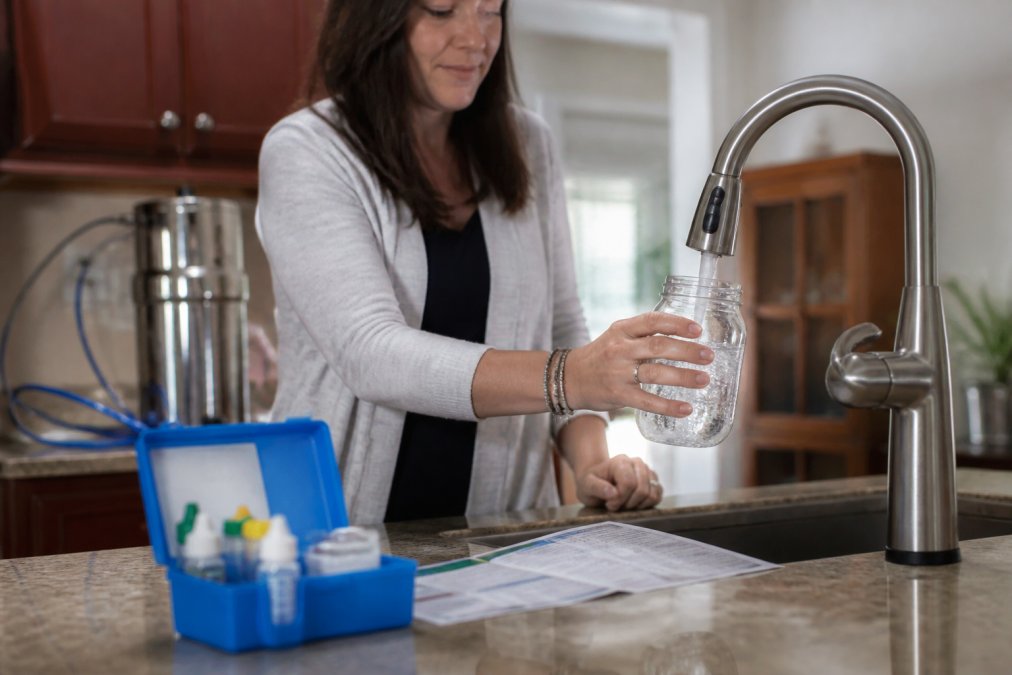
Here is a simple comparison of your options:
Test Method | Best For | Catches |
|---|---|---|
Water quality report | Municipal water | Regulated contaminants |
Home test strip | Quick screening | Hardness, pH, chlorine |
Certified lab test | Well water, full picture | Lead, PFAS, bacteria, metals |
Whole House Water Filter vs Under Sink: Which Fits Your Home?
A whole house water filter and an under sink filter solve different problems. The right pick depends on where your water goes wrong.
Choose based on your goal:
- Drinking water only: under sink or countertop unit
- Appliance and pipe protection: whole house system
- Both: whole house filter plus a drinking water stage
How Whole House Water Filters Work: Filtration Stages and Media
A whole house water filter is a point-of-entry system that cleans all the water entering your home through a series of stages. Water flows through the main line, passes through filter media, and exits clean to every fixture.
Most systems stack several stages:
- Sediment filter: traps sand, rust, and dirt
- Carbon filtration: removes chlorine, taste, and odor
- Specialty media: targets lead, heavy metals, or PFAS
- Water softener: removes calcium and magnesium that cause hardness
What a Whole House Water Filter Removes (and What It Doesn't)
A whole house water filter removes sediment, chlorine, and many heavy metals, but it is not a cure-all. Knowing the limits keeps your expectations honest.
What it handles well:
- Sediment, rust, and dirt
- Chlorine and its taste and odor
- Some heavy metals like lead and mercury
- Scale-causing minerals, with a softener stage
What it may miss:
- Dissolved contaminants that need reverse osmosis
- Some PFAS, unless the media is rated for them
- Bacteria and viruses, unless a UV stage is added
Water Pressure, Flow Rate, and Plumbing Integrity: What to Know
Water pressure is the hidden cost of a poorly sized system. Every filter adds resistance, and a unit too small for your home will choke your flow. You will feel it in the shower.
Watch for these pressure issues:
- Weak flow at upstairs fixtures
- Showers that lose pressure when a tap runs
- A system that needs frequent filter changes
Total Cost of Ownership and Maintenance: The Long View
The sticker price is the smallest number in this decision. Total cost of ownership is the system plus installation plus every cartridge you will ever buy plus the water and time you spend maintaining it. Over a typical system's life, replacement media often costs more than the hardware itself. That is the number most buyers never calculate before signing.
The Four Cost Buckets
1. Upfront hardware. A basic two-stage sediment and carbon whole house unit sits at the low end. A multi-stage system with a softener and specialty media for lead or PFAS sits at the high end. Capacity, not brand, drives most of the spread.
How to Build Your Own Five-Year Estimate
You do not need a spreadsheet, just four numbers:
- System purchase price
- Install cost (DIY or quoted)
- Cost per cartridge, multiplied by how many changes per year
- Softener salt per year, if applicable
Multiply the annual media and salt by five, add the upfront and install, and you have a realistic five-year figure. Run the same math for an under sink unit and a pitcher. The whole house system usually wins on cost per gallon treated, but only if you actually use the water it protects. If you only drink filtered water and never notice scale or chlorine elsewhere, the smaller system is the better buy.
Maintenance Reality
Maintenance is simple but not optional. Sediment and carbon stages typically need attention at least once a year, and some homes with heavy sediment need it twice. Specialty media follows the manufacturer's schedule, which is based on gallons treated, not calendar time. If your water use is high, your cartridges retire early.
DIY vs Professional Installation: A Cost-Benefit Analysis
Most articles tell you to hire a pro if you are unsure. That is not a cost-benefit analysis. Here is the honest breakdown of what each path actually costs you in money, risk, and warranty coverage.
What DIY Actually Saves
A whole house filter install is a plumbing job, not an appliance swap. You are cutting into the main water line, which is under constant pressure. The savings from DIY come entirely from labor, and labor is the smaller half of most installs. What you are really trading is a known invoice for an unknown risk.
DIY makes sense when all of these are true:
- Your main line is exposed, accessible, and has room for the housing and bypass
- You have worked with copper, PEX, or push-to-connect fittings before
- You can shut off the main and drain the line safely
- Your local code allows homeowner plumbing work on the main line
- The manufacturer's warranty does not require a licensed installer
What Professional Installation Actually Buys
A licensed plumber brings three things DIY does not: a permit path, insurance if something floods, and a warranty on the work itself. That last one matters most. If a DIY joint fails at 2 a.m., you own the damage. If a pro's joint fails, their liability coverage is on the hook.
Hire a pro when any of these are true:
- Your plumbing is old, corroded, or cramped
- You need soldered copper, a bypass valve, or a pressure regulator
- Your main line is behind a wall or under a slab
- You are on a well with a pressure tank and switch
- The system is large enough to need a dedicated drain for backwash
The Failure Modes Nobody Warns You About
These are the specific ways DIY installs go wrong, and why the risk is not hypothetical:
- Cross-threaded fittings. Hand-tightening a plastic housing onto metal threads strips them. The leak starts slow and shows up as water damage, not a puddle.
- Missing or reversed bypass. Without a bypass, every cartridge change means shutting off the whole house. Install it backward and you cannot isolate the filter at all.
- No pressure regulator. If your incoming pressure is high, the filter housing sees it constantly. A regulator protects the housing and the rest of your plumbing.
- Wrong flow direction. Sediment and carbon stages are directional. Install them backward and the media does not work as designed.
- Unsupported housing weight. A full cartridge housing is heavy. Without a bracket or support, the weight hangs on the pipe joints.
The Decision Rule
Weighing a whole house water filter against your options comes down to your test results. Healthy Water Solutions LLC offers certified lab water testing and WQA Certified Water Specialist guidance, so you can decide with data instead of guesswork. Our education-first approach helps you avoid buying equipment you do not need, and our strategy calls map your results to the right filtration setup for your home.
Frequently Asked Questions
What are the disadvantages of a whole house water filter?
Whole house systems treat all water entering your home, but they have drawbacks. Upfront and installation costs can be higher than point-of-use filters. They require regular filter cartridge changes, and if undersized, they can reduce water pressure. They also do not remove all contaminants, such as dissolved gases or some microorganisms, so a specific contaminant test is essential to confirm what you need. Maintenance is ongoing, and improper installation can affect plumbing integrity.
How do I know if my water quality requires a whole house system?
Start by reviewing your municipal water quality report or testing your well water. Look for contaminants like lead, PFAS, chlorine byproducts, or heavy metals that affect the whole home. If you notice scale buildup, odd taste or odor, or skin irritation, a whole house filter may help. Testing is the only way to know. A certified lab test will show total dissolved solids, water hardness, and specific contaminants, so you can match the system to your water profile.
Do whole house filters affect water pressure?
They can if the system is undersized or the filter media becomes clogged. A properly sized whole house filter with adequate flow rate should not noticeably reduce pressure. However, as filter cartridges load with sediment, pressure may drop. Regular maintenance and choosing a system with a bypass valve can help maintain consistent pressure. If you have high water hardness or sediment, a pre-filter may be needed to protect the main filter and preserve flow.
Which is better for my home, an under-sink or a whole house water filter?
It depends on your goals. Under-sink filters treat water at a single point, typically for drinking and cooking, and are less expensive. Whole house filters treat all water entering your home, protecting plumbing and appliances from scale and chlorine. If you are concerned about contaminants like lead or PFAS throughout your home, or if you have hard water, a whole house system may be more appropriate. Testing your water will clarify which option fits your needs.
Your water tells a story, but only a proper test reads it clearly. Guessing leads to overspending or leaving a real problem untreated. Healthy Water Solutions LLC tests your water with certified labs, explains what the results mean, and helps you choose a system that fits your home and budget. Get started with Healthy Water Solutions LLC and make your next water decision on facts, not fear.
Frequently Asked Questions
What are the disadvantages of a whole house water filter?
Whole house systems treat all water entering your home, but they have drawbacks. Upfront and installation costs can be higher than point-of-use filters. They require regular filter cartridge changes, and if undersized, they can reduce water pressure. They also do not remove all contaminants, such as dissolved gases or some microorganisms, so a specific contaminant test is essential to confirm what you need. Maintenance is ongoing, and improper installation can affect plumbing integrity.
How do I know if my water quality requires a whole house system?
Start by reviewing your municipal water quality report or testing your well water. Look for contaminants like lead, PFAS, chlorine byproducts, or heavy metals that affect the whole home. If you notice scale buildup, odd taste or odor, or skin irritation, a whole house filter may help. Testing is the only way to know. A certified lab test will show total dissolved solids, water hardness, and specific contaminants, so you can match the system to your water profile.
Do whole house filters affect water pressure?
They can if the system is undersized or the filter media becomes clogged. A properly sized whole house filter with adequate flow rate should not noticeably reduce pressure. However, as filter cartridges load with sediment, pressure may drop. Regular maintenance and choosing a system with a bypass valve can help maintain consistent pressure. If you have high water hardness or sediment, a pre-filter may be needed to protect the main filter and preserve flow.
Which is better for my home, an under-sink or a whole house water filter?
It depends on your goals. Under-sink filters treat water at a single point, typically for drinking and cooking, and are less expensive. Whole house filters treat all water entering your home, protecting plumbing and appliances from scale and chlorine. If you are concerned about contaminants like lead or PFAS throughout your home, or if you have hard water, a whole house system may be more appropriate. Testing your water will clarify which option fits your needs.